
22+ Years of Experience
Installation, oversight and business development inform the work.
Port Charlotte Septic Services is the #1 septic in Port Charlotte, FL. We handle septic pumping, septic cleaning, septic inspections, tank repairs, septic installation or replacement, and drain field services for residential and commercial properties across greater Port Charlotte.
We have over 22 years of experience handling installation, oversight, and business development. It is important to start with the cause, then choose the right service for your property. Local groundwater, canal setbacks and sewer availability shape the plan. Service life depends on the product, site and maintenance.
Installation, oversight and business development inform the work.
Separate tank, plumbing, pump and field problems.
Check groundwater, sewer availability and permits.
Understand the work and starting price before scheduling.
Match the service to property use and wastewater needs.
Connect today’s service with the right maintenance plan.
Start with the service that matches your need. If you are unsure, describe the symptoms.
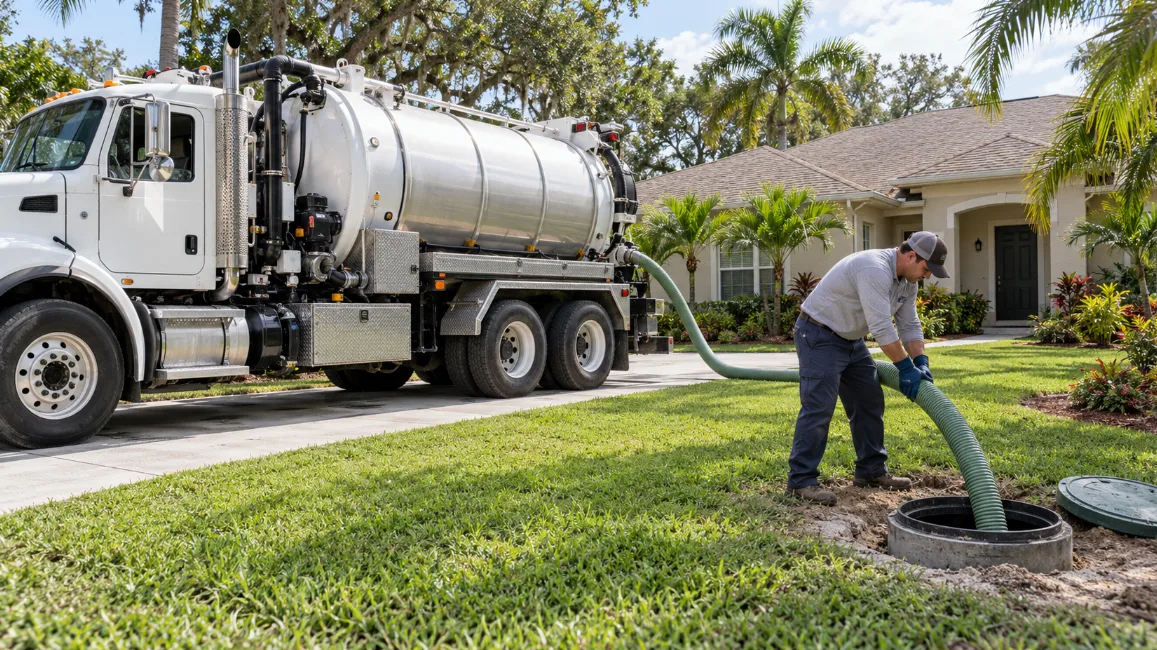
Routine care, a recurring backup or a new system: each starts with a clear scope and the property’s actual needs.
Remove built-up sludge and floating waste. Check actual tank size, compartments and access. Recurring backups need diagnosis beyond another pump-out.
Explore Septic ServiceClean deposits and accessible components when needed. Separate routine pumping from wash-down or approved deep cleaning. Define access and disposal in the quote.
Explore Septic ServiceReview tank condition, records and accessible components. Real estate inspections help buyers understand the system. Agency approval and a condition inspection are different.
Explore Septic ServiceFind leaks, damaged fittings, filter issues or pump faults. Separate a repairable part from structural tank failure. Review permits before excavation.
Explore Septic ServicePlan around bedrooms, floor area, soil and groundwater. Check sewer availability and engineer requirements. Choose the approved treatment system before excavation.
Explore Septic ServiceRequest help for an active backup or high tank level. Describe overflow, alarms and recent rain. Availability is confirmed; the form is not dispatch.
Explore Septic Service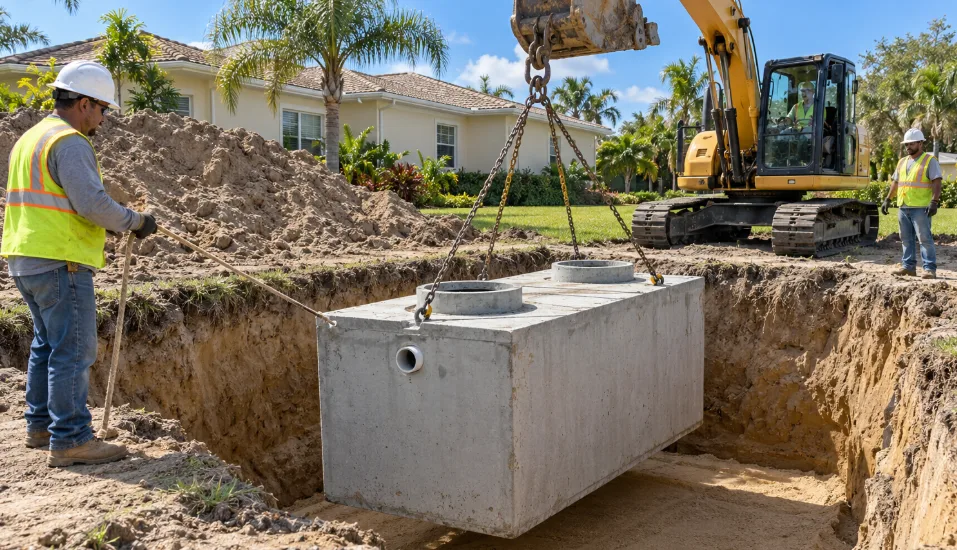
A tank can be sound while the field struggles. Review distribution, soil and groundwater before deciding on repair or replacement.
Check pipes, distribution and dosing equipment before blaming the soil. A localized repair differs from full replacement. Aeration is not a universal cure.
Explore Drain Field ServiceInvestigate wet spots, odors and backups that return after pumping. Review layout, accessible distribution and recent weather. A dry lawn is not proof of performance.
Explore Drain Field ServiceReplace a field that can no longer function adequately. Review soil, groundwater, demand and available space. Keep field-only work distinct from total replacement.
Explore Drain Field ServiceStart with the floor plan, system record, sewer availability and site conditions before choosing a tank or replacement field.
The housing figure is a county listing median, not the average of all Port Charlotte or septic-served homes. Bedrooms, building area and approved use set design flow. The system record identifies actual tank capacity.
Check sewer availability first. New systems need engineer plans, DEP 4015, site and floor plans, a survey or legal description, and fees. Design, permit review, installation and inspection are separate stages. Missing information can extend the schedule.
What looks like a tank failure can start in the drain field, the plumbing or the way the property uses water.
Missed pumping or a blocked filter can affect the field.
Leaks and heavy use can exceed the approved demand.
These obstruct flow and can disrupt treatment.
High groundwater limits drainage and treatment space.
Roots damage pipes; heavy loads compact soil or crush parts.
Failed pumps, alarms and neglected ATUs interrupt service.
A septic system is more than a tank. Its storage capacity, treatment process and drain field each do a different job. Use this guide to understand home size, tank materials, expected lifespan and Port Charlotte conditions before choosing a service.
Charlotte County listed homes had a 1,698 sq ft median in September 2026. This is county listing data, not a citywide average or a septic-home survey.
A 1,700 sq ft, three-bedroom home is a useful planning example. Its matched Florida category starts at 300 gallons/day and 900 gallons of effective tank storage. A larger floor plan can change that calculation.
| Home example | Design flow | Minimum tank storage |
|---|---|---|
| 2 bedrooms; up to 1,200 sq ft | 200 gallons/day | 900 gallons |
| 3 bedrooms; 1,201–2,250 sq ft | 300 gallons/day | 900 gallons |
| 4 bedrooms; 2,251–3,300 sq ft | 400 gallons/day | 1,050 gallons |
Bathroom count alone does not size a system. Use approved bedrooms, building area and property use.
A tank’s liquid capacity is storage. Equipment rated in gallons per day describes treatment flow. They are different measurements.
| Design flow | Tank storage |
|---|---|
| Up to 300 gallons/day | 900 gallons |
| 301–400 gallons/day | 1,050 gallons |
| 401–500 gallons/day | 1,200 gallons |
| 501–600 gallons/day | 1,350 gallons |
These are state minimum examples, not a complete design. Confirm actual capacity, compartments, treatment equipment and the approved drain field.
Heavy and rigid. Inspect walls, lids and seams. Lifting access and a stable base matter.
Lightweight composite. Check the shell and fittings. Follow approved support and anchoring details.
Molded plastic. Correct backfill and burial depth help prevent movement or deformation.
Tank shells, fields and mechanical parts wear differently. Installation, groundwater and maintenance affect service life. A material name alone is not a replacement date.
A tank holds solids; a drain field treats and disperses liquid in suitable soil. Raised drain fields may be needed for groundwater separation.
Added oxygen improves treatment. Charlotte requires an operating permit renewed every two years, a maintenance agreement and service at least twice yearly.
An engineer designs treatment to meet specific targets. An operating permit, maintenance contract and recorded deed notice apply. Sampling follows the design.
Nitrogen reduction: An ordinary aerobic unit is not automatically nitrogen-reducing. Check the property against DEP’s mapped requirements and approved equipment. An in-ground nitrogen-reducing biofilter is another approved technology where suitable.
Utility sewer is different: A tank with a pump may belong to Charlotte County’s low-pressure sewer network. Effluent goes to a utility plant, not a private drain field. Confirm ownership before arranging work.
Timing: Allow 4–6 business days as an initial planning allowance after a complete application. This is not a measured DOH-Charlotte queue or guaranteed approval. Missing documents, site review, engineering and workload can extend it. Confirm the current schedule with the permitting office.
Charlotte’s building-review queue is separate from septic review. Since July 1, 2026, a septic application receipt may support issuance of a single-family building or plumbing permit. It is not septic approval; starting septic construction before approval carries owner/applicant liability.
For repair review, expect tank-condition certification and usually 12 months of residential or 18 months of commercial water-use records, unless supplied by an unmetered well.
Nearby Punta Gorda Airport averages 52.97 inches of rain yearly in the 1991–2020 NOAA normals. Wet ground can limit field drainage. Check seasonal groundwater and soil on the actual lot.
For non-ATU systems within 300 feet of a canal or other surface water, measured from the closest drain field point, Charlotte requires pump-out at least every five years plus tank certification and a managed-system permit. Actual use may require earlier pumping.
East and West Spring Lake, El Jobean and Ackerman have vacuum sewer projects. Other addresses use gravity or low-pressure sewer. Check the utility record before assuming a visible tank is private septic.
Keep people away from sewage and reduce water use. Have saturated conditions assessed before pumping; an emptied tank can shift or float. ATU alarms and pump failures need equipment checks after outages.
Practical answers for Port Charlotte homes and businesses.
Use the approved bedrooms and building area. Matched Florida examples start at 900 gallons for three bedrooms and 1,201–2,250 sq ft. Check actual records and the full design.
Conventional tank-and-field systems, aerobic units and performance-based treatment have different designs and upkeep. Confirm your permit. A utility low-pressure sewer tank is a separate system.
Yes. Non-ATU systems within 300 feet of canals or surface water fall under Charlotte’s managed pump-out, certification and permit requirements. Check the mapped property.
Charlotte requires a maintenance agreement, an operating permit renewed every two years and maintenance at least twice a year. Follow the approved system requirements.
Yes. DOH-Charlotte requires signed, sealed plans from a Florida-registered engineer for new construction systems.
Allow 4–6 business days as an initial planning allowance after a complete application. This is not a measured DOH-Charlotte queue or guaranteed approval. Missing documents, site review, engineering and workload can extend it. Confirm the current schedule with the permitting office.
Saturated soil, groundwater entering a leak or equipment trouble can affect flow. Pumping alone may not resolve the cause.
Yes. Share the business use, wastewater type and access details so the scope can be reviewed.
No. A submission does not confirm delivery, dispatch or an appointment. Reduce water use and obtain prompt professional help for active overflow.
Tell us where you are, what is happening and the service you need.